The Rise of MMC and MDC Connectors in High-Density Fiber Networks
Meeting the Demands of Next-Generation Connectivity
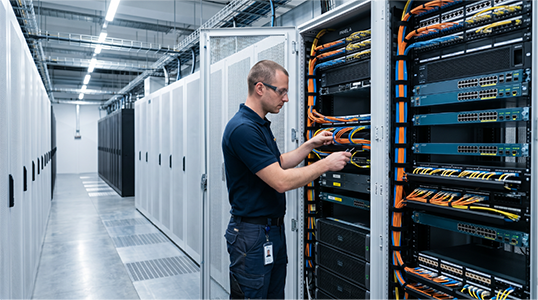
As cloud services, AI workloads, 5G, and immersive applications expand, fiber infrastructure is under unprecedented pressure. Traditional connectors like LC and MPO have served the industry well, but with rack space at a premium, the industry has turned toward a new class of VSFF (Very Small Form Factor) connectors.
What Are VSFF Connectors?
VSFF connectors are a new family of optical connectors designed specifically to maximize fiber density while minimizing physical footprint. The goal of VSFF technology is to allow more connections per rack unit without sacrificing optical performance, reliability, or usability.
They are smaller than traditional LC and MPO connectors and are engineered to support the explosive growth in hyperscale data centers, cloud infrastructure, and 5G networks. In addition, many VSFF solutions include push-pull boot designs for tool-free handling, and when combined with dust shutter technology, they deliver safety, cleanliness, and environmental benefits by reducing the need for disposable caps.
The two primary VSFF connector types are:
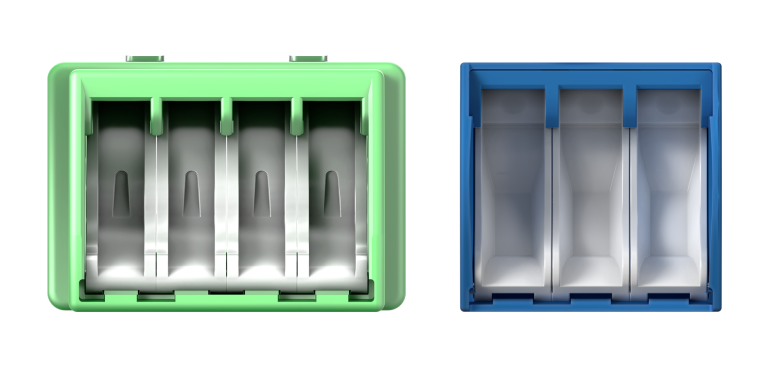
- MDC (Miniature Duplex Connector) – A compact LC replacement, tripling density.
- MMC (Miniature Multi-Fiber Connector) – A smaller MPO-type connector for multi-fiber scalability.
Together, these VSFF connectors are transforming hyperscale data centers and telecom networks by enabling denser, faster, and more sustainable connectivity.
What Are MDC and MMC Connectors?
- MDC (Miniature Duplex Connector)
The MDC is a VSFF (Very Small Form Factor) connector designed as a direct LC replacement in duplex applications. With its reduced size, MDC triples the density of LC connectors while maintaining reliable performance. It features push-pull boot designs for tool-free installation and field-friendliness, making it especially valuable in hyperscale and telecom environments.

- MMC (Miniature Multi-Fiber Connector)
The MMC is a new generation of multi-fiber connector, based on MPO technology but with a much smaller footprint. It enables higher port density in transceivers, cassettes, and patch panels, supporting 16-fiber and future 32-fiber designs. MMC ensures scalability as bandwidth demands continue to grow.
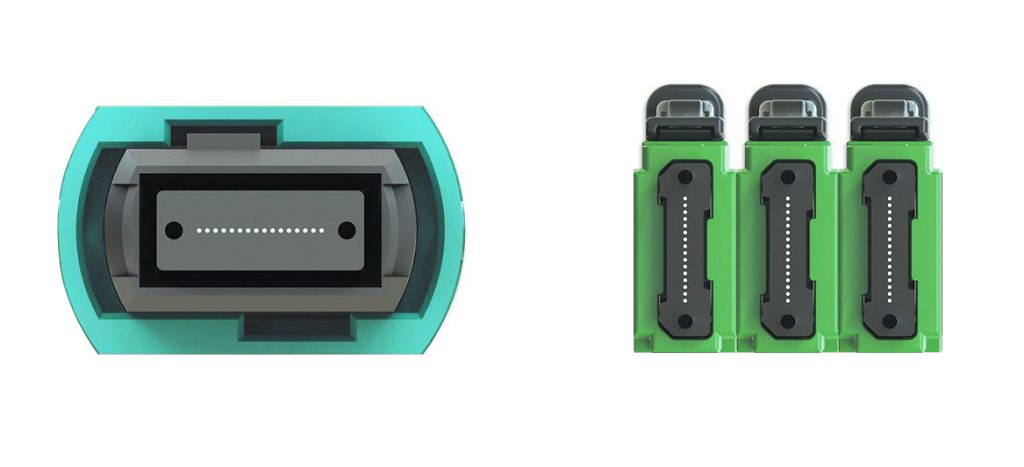
Density Advantage: MPO vs MMC in 1U Panels
The real-world benefit of MMC becomes clear when comparing panel capacity:
- A 1U panel with MPO connectors can typically hold 72 connections.
- The same 1U panel with MMC connectors can accommodate 264 connections.
That’s a 3.7x increase in density, enabling operators to scale bandwidth while reducing rack space, cabling complexity, and overall infrastructure costs.
For facilities facing rapid growth in fiber counts to support hyperscale data centers, 5G backhaul, and terabit-class architectures, MMC is more than an upgrade—it’s a necessity.
SANWA’s MMC and MDC IP5x Dust Shutter Solutions
Sanwa Technologies has been at the forefront of high-density interconnect innovation. As an official licensee of US Conec since 2021, Sanwa offers a portfolio of MMC and MDC connectivity products designed to balance density, reliability, and environmental responsibility.

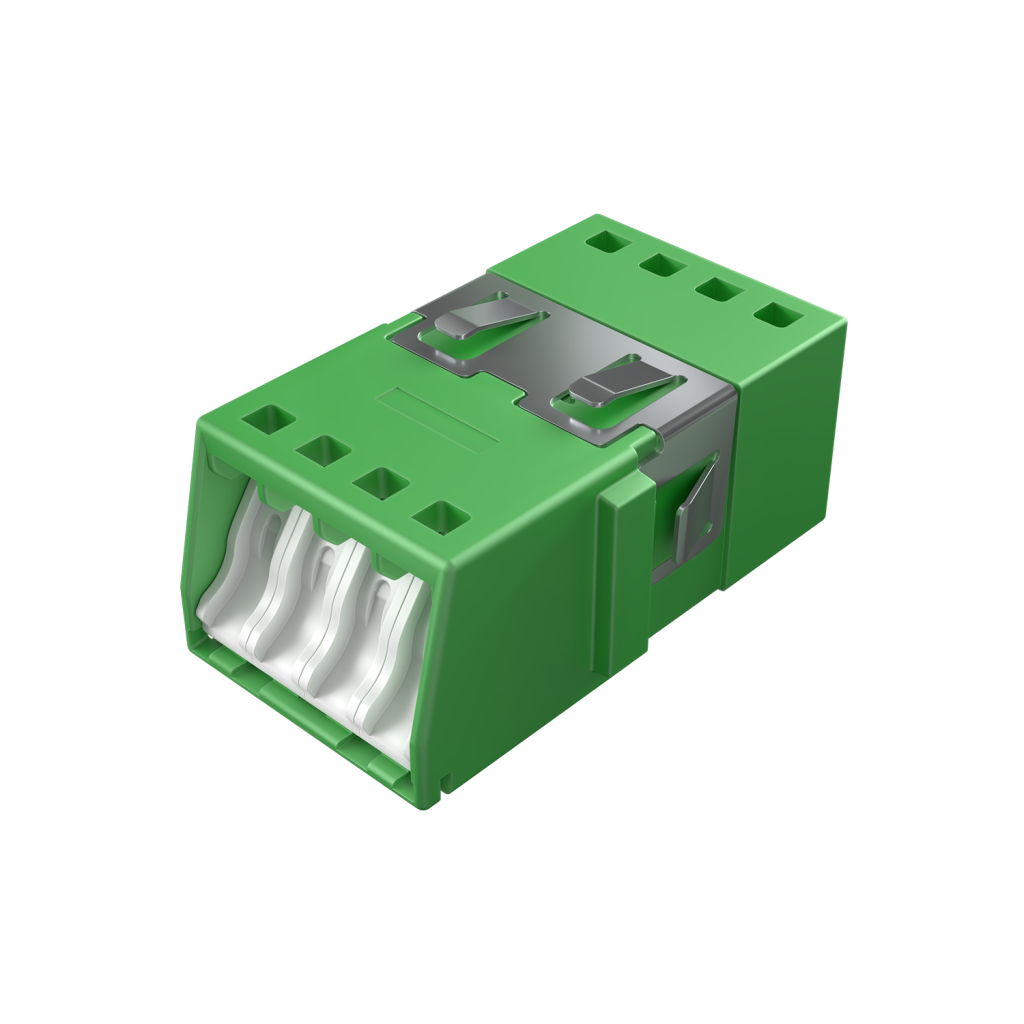
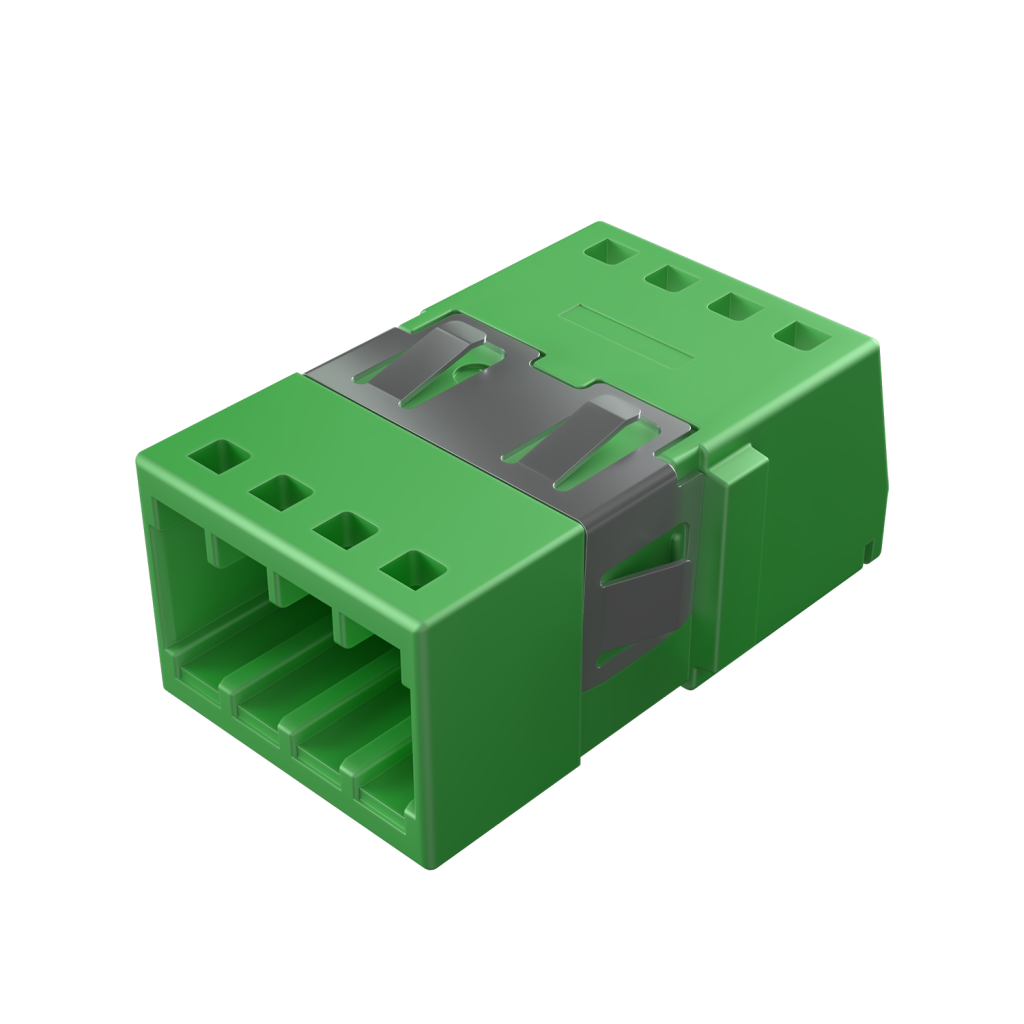
- MMC Dust Shutter Adapters
- Integrated shutters provide laser eye protection, IP5X dust prevention, and eliminate the need for disposable caps—making them more environmentally friendly.
- MMC Adapters
- SANWA offers 2-ports, 4-ports and 6-ports.
- MMC Connectors
- Can accommodate 264 connections in 1U
- MDC Dust Shutter Adapters
- Same IP5X Dust shutter technology ensures cleanliness and user safety.
- MDC Connectors
- Tool-free MDC Jr. Connector for fast, simple field installations
- MDC Sr. Connector is designed for high-performance and reliability in demanding applications.



Conclusion
As the industry transitions into the era of very small form factor connectivity, MDC and MMC connectors are becoming the new benchmarks for efficiency and scalability. The ability to achieve 3.7x the density in 1U panels is a game changer for hyperscale and telecom applications.
With its licensed partnership with US Conec and decades of optical interconnect expertise, Sanwa Technologies is uniquely positioned to deliver reliable, sustainable, and future-ready fiber solutions.
FAQ
What are VSFF connectors?
VSFF connectors are Very Small Form Factor fiber optic connectors designed to increase connection density while reducing physical footprint in high-density optical environments.
Why are VSFF connectors important?
They are important because they allow operators to fit more fiber connections into the same rack space, which is critical in hyperscale data centers, AI infrastructure, and other dense optical systems.
What is the difference between MDC and MMC?
MDC is a compact duplex connector often used as a high-density alternative to LC, while MMC is a compact multi-fiber connector designed for ultra-high-density optical connectivity beyond conventional MPO-based packaging.
Are VSFF connectors replacing LC and MPO/MTP?
Not in every application. LC and MPO/MTP are still widely used, but VSFF connectors are increasingly attractive when higher density and better panel efficiency are required.
Where are VSFF connectors used?
They are commonly used in hyperscale data centers, AI clusters, HPC systems, high-density patch panels, and advanced optical architectures that require more connectivity in less space.