Why Multicore Fiber Matters: Enabling the Next Generation of Optical Networks
As global data traffic continues to grow at an unprecedented rate, conventional single-core optical fibers are approaching their physical and economic limits. To meet future demands for capacity, efficiency, and scalability, the optical industry is turning its attention to Multicore Fiber (MCF)—a key technology in the evolution of space-division multiplexing.
Why Multicore Fiber Is Needed
For decades, increases in optical transmission capacity have been achieved through wavelength-division multiplexing (WDM), higher modulation formats, and advanced signal processing. However, these methods are now facing diminishing returns due to fiber nonlinearities, power consumption constraints, and cost efficiency challenges.
Multicore fiber addresses these limitations by introducing multiple independent cores within a single cladding, enabling parallel signal transmission in the spatial domain. This approach significantly increases capacity without proportionally increasing fiber count, offering a more scalable and compact solution.


In addition to higher capacity, MCF also contributes to:
- Reduced cable size and weight
- Lower installation and maintenance costs
- Improved energy efficiency per transmitted bit
These advantages make multicore fiber an attractive option for future optical infrastructures.
Where Multicore Fiber will be Used
While MCF is still considered an emerging technology, it is already being explored and deployed in several advanced applications:
Long-Haul and Submarine Networks
MCF enables ultra-high-capacity transmission for backbone and undersea cables, where space, weight, and installation costs are critical. Research and early field trials have demonstrated petabit-class transmission using multicore designs.
Data Centers and AI Clusters
Hyperscale data centers and AI computing clusters require massive parallel data transfer within limited physical space. Multicore fiber supports high-density interconnects and short-reach, high-bandwidth links between servers, switches, and accelerators.
Technologies Required to Enable Multicore Fiber
The successful adoption of multicore fiber depends on a broad ecosystem of supporting technologies:
Manufacturing and Assembly Technologies
- High-accuracy molding and machining
- Advanced splicing and assembly processes
Measurement and Evaluation
- Core-by-core loss measurement
- Crosstalk evaluation
- Reliability and environmental testing
High-Precision Connectors
Because multicore fibers contain multiple cores, accurate core-to-core alignment is essential. Even a small misalignment can cause signal loss or interference between cores.
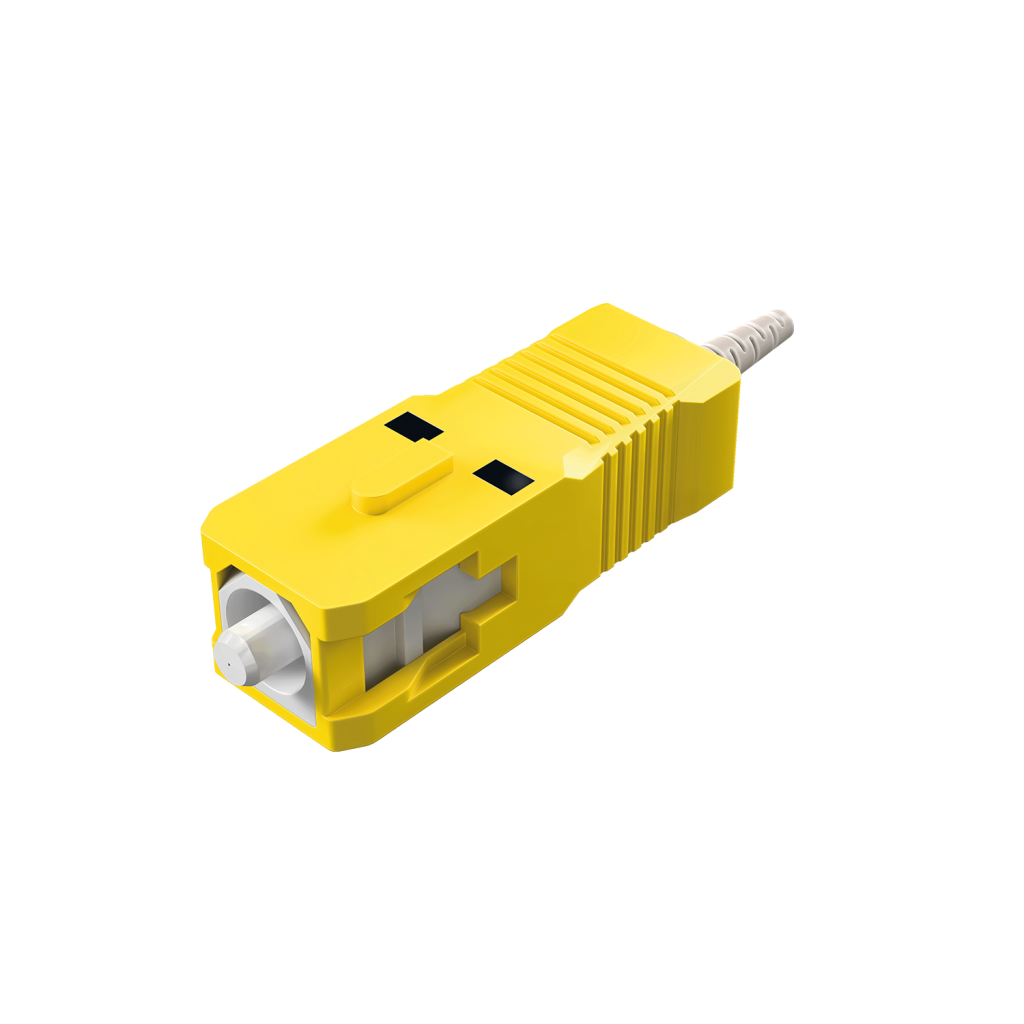
Sanwa Technologies is currently developing MCF LC Connectors and MCF SC connectors that enable precise core alignment for multicore fiber, supporting stable and low-loss connections.


FIFO (Fan-In / Fan-Out) Devices
FIFO devices are needed to connect multicore fibers to conventional single-core systems.
Sanwa is also developing FIFO solutions(MCF FIFO Fan-Out type & MCF FIFO Pluggable type) to support smooth integration of multicore fiber into existing networks.


Looking Ahead: From Research to Infrastructure
Multicore fiber represents a fundamental shift in how optical capacity is scaled. As demand driven by cloud computing, AI, and next-generation communication continues to rise, MCF will play an increasingly important role in future network architectures.
While challenges remain in standardization, cost, and ecosystem readiness, continued collaboration between fiber manufacturers, connector suppliers, system vendors, and network operators will accelerate the transition from research to real-world infrastructure.
Multicore fiber is not simply an incremental improvement—it is a key enabler for the next era of optical connectivity.